MERCEDES 166-723-01-39 Securing Rod Benz
fits make: Mercedes. year: 2012–2015.
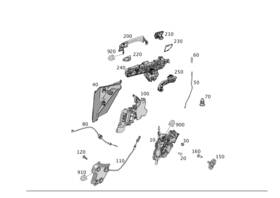
( Manufacturer Part Number: 166-723-01-39 ), ( Model: GL350 GL450 GL550 GL63 ML250 ML350 ML400 ML63 ML550 ), ( Part Type: Rod ), ( Genuine Oem: Yes ), ( Manufacturer Warranty: 1 Year ), ( Fitment Type: Direct Replacement ), ( Make: Mercedes-benz ), ( Year: 2012 2013 2014 2015 ), ( Parts Included: Only Part Reference 50 On The Diagram Is Included )
Review MERCEDES benz Genuine Securing Rod fits GL350 2012–2015
The **Mercedes-Benz 166-723-01-39 Securing Rod** is a precision-engineered component designed exclusively for the brand s high-performance and luxury vehicles, ensuring optimal structural integrity and safety compliance. Crafted from high-grade, heat-treated steel, this rod is built to withstand extreme forces, making it an essential part of the suspension and chassis systems in select Mercedes-Benz models. Its robust construction prevents unwanted movement or misalignment of critical components, such as the rear axle or differential housing, thereby enhancing ride stability, handling precision, and overall driving dynamics. The securing rod operates within the vehicle s drivetrain, providing a secure connection between key mechanical assemblies while absorbing vibrations and shocks, which is particularly vital in high-speed or off-road conditions. Engineered to meet stringent OEM specifications, this part is a direct replacement for the original equipment, ensuring seamless integration with the vehicle s existing systems without compromising performance or longevity. Whether installed in a classic Mercedes-Benz or a modern luxury sedan, this securing rod exemplifies the brand s commitment to engineering excellence, delivering both reliability and a refined driving experience. Its meticulous design and durable construction make it a cornerstone of the vehicle s structural framework, contributing to the iconic Mercedes-Benz reputation for precision, durability, and uncompromising quality.
### **Pros and Cons of Buying a Mercedes-Benz Securing Rod (Part Number: 166-723-01-39)**
#### **Pros:**1. **Original Equipment Manufacturer (OEM) Quality** This part is manufactured by Mercedes-Benz, ensuring high durability, precision engineering, and compatibility with your vehicle. OEM parts are designed to meet the same standards as factory components, reducing the risk of premature failure or poor performance.
2. **Reliability and Longevity** Mercedes-Benz parts are built to last, often outperforming aftermarket alternatives in terms of lifespan. A securing rod is a critical component in suspension systems, and an OEM part minimizes the risk of sudden failure, which could lead to handling issues or safety concerns.
3. **Warranty Coverage** If purchased directly from an authorized Mercedes-Benz dealer or through an approved supplier, this part may come with a warranty, providing peace of mind against defects. Some dealers offer extended warranties on OEM parts, which can be beneficial for long-term ownership.
4. **Exact Fit and Functionality** Unlike aftermarket parts, which may require modifications or adjustments, an OEM securing rod is designed specifically for your vehicle model. This ensures proper fitment, alignment, and functionality, reducing the risk of improper installation or performance issues.
5. **Resale Value Protection** Maintaining your vehicle with genuine Mercedes-Benz parts helps preserve its value. Potential buyers are more likely to pay a premium for a car that has been serviced with original components, as it signals proper care and attention to detail.
6. **Access to Technical Support** Mercedes-Benz dealers and authorized service centers have access to technical documentation, diagnostic tools, and expert advice for OEM parts. This can be invaluable if you encounter installation challenges or need guidance on related components.
7. **Compatibility with Other OEM Parts** Since this part is designed to work seamlessly with other Mercedes-Benz components, replacing it with an OEM securing rod ensures that the entire system operates as intended. This is particularly important for suspension, steering, or chassis-related parts that interact with multiple systems.
---
#### **Cons:**1. **Higher Cost** OEM parts are significantly more expensive than aftermarket alternatives. The price of a Mercedes-Benz securing rod (166-723-01-39) will likely be 2 4 times higher than a comparable aftermarket part. This can be a major drawback if you are on a tight budget or if the part is not critical to immediate functionality.
2. **Longer Lead Times** OEM parts, especially those ordered directly from a dealer, may take longer to arrive compared to aftermarket options. This delay can be inconvenient if you need the part urgently for repairs or maintenance.
3. **Limited Availability Outside Dealerships** While some online retailers and specialty auto parts stores carry OEM Mercedes-Benz parts, not all do. You may need to rely on a dealer, which can be less convenient and more expensive than purchasing from a third-party supplier.
4. **Potential Overkill for Non-Critical Repairs** If the securing rod is not a safety-critical component (e.g., it is not directly involved in braking or steering), some owners may question whether the cost of an OEM part is justified. In such cases, a high-quality aftermarket part with strong reviews might offer a cost-effective alternative.
5. **Mixed Perceptions on Aftermarket Alternatives** While OEM parts are the gold standard, some aftermarket brands (e.g., Mann, Febi Bilstein, or Dorman) produce parts that are nearly as reliable and significantly cheaper. However, the quality can vary, and there is a risk of purchasing a subpar part if you do not research the brand thoroughly.
6. **Installation Complexity** Some Mercedes-Benz parts, especially those related to suspension or chassis, require specialized tools or expertise to install correctly. If you attempt a DIY replacement without the proper knowledge, you might void warranties or introduce new issues.
7. **Environmental and Ethical Considerations** OEM parts contribute to e-waste and resource consumption. If sustainability is a priority, you might consider whether an aftermarket part or refurbished OEM part would be a more eco-friendly choice.
---
### **Conclusion:**The decision to purchase an OEM Mercedes-Benz securing rod (166-723-01-39) depends on your priorities. If **reliability, longevity, warranty coverage, and maintaining your vehicle s value** are your top concerns, then the OEM part is the clear choice. It is the safest option for critical components, especially if your vehicle is used for daily driving or holds significant resale value.
However, if **cost is a major factor** and the securing rod is not directly tied to safety or performance-critical systems, you may explore high-quality aftermarket alternatives. Always ensure that any aftermarket part you consider has strong reviews, is compatible with your vehicle, and comes from a reputable brand.
For most Mercedes-Benz owners who prioritize **long-term reliability and brand integrity**, the OEM securing rod is the recommended choice. It is worth the investment if you want to avoid potential issues down the line and ensure that your vehicle continues to perform as intended.
---
### **Final Recommendation:** **Buy the OEM Mercedes-Benz securing rod (166-723-01-39) if:**- You value brand consistency and long-term reliability.
- The part is critical to your vehicle s safety or performance.
- You have access to warranty coverage or plan to keep the vehicle for an extended period.
- You are comfortable paying a premium for genuine quality.
**Consider an aftermarket alternative if:**- The securing rod is not safety-critical and the part is relatively inexpensive.
- You have done thorough research on the aftermarket brand and its reputation.
- You are working with a tight budget and can mitigate risks by choosing a well-reviewed part.
For most Mercedes-Benz owners, **the OEM part is the best choice** due to its unmatched quality, compatibility, and peace of mind. However, always weigh the pros and cons against your specific situation before making a decision.
Details:
Shipping Carrier substitutions may be made at our determination in an attempt to reduce shipping cost the customer. Electrical parts are not returnable. Parts must be resalable and in the original packaging.
part #: 1667230139 prices
- $13.52-$24.92
specifications carlockiio:
- for makes: Mercedes
- for years: 2012-2015
- mpn: 166-723-01-39
- model: Gl350 Gl450 Gl550 Gl63 Ml250 Ml350 Ml400 Ml63 Ml550
- part type: Rod
- genuine oem: Yes
- manufacturer warranty: 1 Year
- fitment type: Direct Replacement
- make: Mercedes-benz
- year: 2012 2013 2014 2015
- parts included: Only Part Reference 50 On The Diagram Is Included
shipping carlockiio:
- cost: $0.00
- service: FedEx Ground / FedEx Home Delivery, FedEx 2Day, FedEx Standard Overnight
- carrier: FedEx
- transit: 3-7 Days
- type: Fixed
- class: Standard, Expedited, One-day
offer carlockiio:
- options: Ship-to-home
- availability: In Stock
- quantity: 2
- started: April 21, 2026
- sold: 0
returns carlockiio:
- paid by: Seller
- time: 30 Days
- policy: Returns Accepted
general carlockiio:
- Car Truck Parts Accessories > Exterior Parts Accessories > Exterior Locks Lock Hardware
- condition: New
seller carlockiio:
- rating: 99.8%
- city: Warwick, Rhode Island
- # reviews: 5645
payments carlockiio:
- wallet: Google-pay
- credit card: Diners-club
- other
Mercedes 166-723-01-39 Is Similar To:
- 0019930520 Mercedes-benz Mercedes Oem Front (40% similar) This part fits vehicles made in the following years 2010 , 2011 , 2012 , 2013...(November 18th, 2017)
- 0085 Mercedes Benz C230 C240 C320 Trunk Lid Latch Lock Actuator W Cable (24.1% similar) All are items are marked before shipping...(April 4th, 2016)
- 0997202300 Mercedes-benz Mercedes Oem 14-15 (41.9% similar) This part fits vehicles made in the following years 2014 , 2015 , 2016 , 2017...(June 13th, 2017)
- 0997203200 Mercedes Benz W222 Door Lock (37.6% similar) Buyer pays the return shipping. Mercedes benz W222 door lock, oem...(December 28th, 2016)
- 0997300935 Mercedes-benz Mercedes Oem 2016 (38.5% similar) ...(September 24th, 2017)
- Door Oem 0997304500 Lock Motor Mercedes-benz-mb (31.2% similar) All of our genuine mercedes benz and sprinter maintenance, repair, body and accessory parts provide the same quality, fit and performance that goes into the engineering of mercedes benz and sprinter vehicles. All genuine mercedes benz and sprinter parts are backed by mercedes benz and sprinter's ...(December 6th, 2014)
- 0997304600 Mercedes-benz Mercedes Oem 12-15 (38.1% similar) ...(October 22nd, 2017)
- 1077200135 Mercedes-benz Mercedes R107 450sl (47.2% similar) All parts are tested prior to listing. Mounting points are intact. Mercedes R107 450SL 450SLC 380SL 380SLC left door latch fully functional. Condition is visible in the photos. Note: mercedes benz offered multiple options for these model years. This is a quality used mercedes-benz part in good ...(October 26th, 2017)
- 1077201535 Mercedes-benz Mercedes Oem 86-89 (45.7% similar) ...(December 19th, 2017)
- 1157200135 Mercedes-benz Mercedes 68-73 280se (44.9% similar) Mounting points are intact. Condition is visible in the photos. Each car is carefully selected and individually processed. This part may be listed to fit the year and model of car, that does not mean it will automatically in your vehicle. Mercedes 280SE W108 W115 left door lock actuator latch this ...(September 10th, 2017)
- 1157300235 Mercedes-benz Nos Mercedes W108 (40.4% similar) 3 W108: 250S, 250SE,300SEB, 280S, 280SE, 280SEL W114: 230, 230. Mercedes benz: W108, W109, W114, W115 right rear door lock assembly, with child safety lockout nos. Fits the following MB model's: W109: 300SEL, 6, 250, 280, 280E W115: 220, 230, 2/2 20D, 240D. This part is new old stock, in MB ...(July 20th, 2017)