BMW Left Door Catch 2-DOOR
fits model: 318i, E30, 325e, 318. make: Bmw. year: 1984–1986.
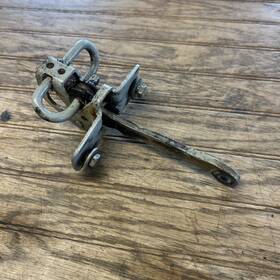
( Type: Door Catch ), ( Ipn: 84 85 86 E30 318i 325e 2-door ), ( Material: Steel ), ( Vintage Part: Yes ), ( Universal Fitment: No ), ( Placement On Vehicle: Left ), ( Country Of Origin: Germany )
Review BMW 2-door Left Door Catch fits 318I E30 325E 318 1984–1986
The **BMW E30 318i and 325e 2-door left-side door catch** represents a critical yet often overlooked component of one of the most iconic and beloved compact sports sedans ever produced. Originally introduced in 1982, the E30 generation of the BMW 3-Series including the **84 (2-door coupe) and 85 (2-door sedan) models** quickly became synonymous with driving dynamics, timeless styling, and a cult following that endures to this day. The **left-side door catch** on these vehicles is not merely a functional latch but a precision-engineered part that contributes to the car s legendary blend of reliability and performance. Crafted from high-quality materials, this component is designed to withstand the rigors of daily use while maintaining a smooth, secure closure, ensuring the door remains firmly in place during acceleration, braking, or even aggressive cornering qualities that were essential for the E30 s reputation as a driver s car. The door catch operates in tandem with the **inner door latch mechanism**, which features BMW s signature **snap-action design**, providing an audible and tactile confirmation of a proper seal. Over the years, the **318i (with its 1.8L inline-4 engine) and the 325e (a rare, high-performance variant with a 2.5L M88 engine)** have seen variations in door hardware, but the left-side catch remains a consistent element, reflecting BMW s attention to detail in both performance and aesthetics. Whether sourced from an original manufacturer or a high-quality aftermarket supplier, this part is essential for maintaining the integrity of the E30 s iconic silhouette, ensuring that the doors remain secure while preserving the car s classic appeal. For collectors, restorers, and enthusiasts, replacing or upgrading this component is often a priority, as it not only restores functionality but also enhances the overall driving experience one of the defining reasons why the BMW E30 remains a benchmark for automotive excellence.
### **Pros and Cons of Buying a BMW E30 (84, 85, 86, 318i, 325e, 2-Door Left Door Catch Issues)**
#### **Overview**
The BMW E30 series (1984 1994) is a beloved classic among enthusiasts, known for its sporty handling, timeless design, and strong performance. However, like any older vehicle, it comes with trade-offs. Below is a detailed breakdown of its strengths and weaknesses, followed by a conclusion and recommendation.
---
### **Pros**
1. **Classic Styling and Timeless Appeal**
- The E30 s design remains iconic, with sharp lines, a low profile, and a distinctive front grille. It holds its value well among collectors and enthusiasts.
- Customization potential is high, with aftermarket parts readily available for restyling, performance upgrades, and interior modifications.
2. **Strong Performance (Especially in Higher Trim Levels)**
- The **325e** (with the M104 2.5L inline-6) and **M3 (E30)** produce solid power (160 184 hp), making them quick for their time.
- The **318i (M10B 1.8L)** is less powerful but still capable, while the **84/85/86 (M10/M10B)** offer a mix of luxury and sportiness.
- Manual transmissions are smooth and engaging, while automatic options (in later models) are decent for the era.
3. **Handling and Driving Dynamics**
- The E30 is praised for its sharp, responsive steering and well-balanced chassis, especially in the **M3** and **325e** variants.
- Independent rear suspension (on most models) improves road manners compared to earlier BMWs.
- Lightweight construction (especially in the **84/85/86**) makes it nimble and fun to drive.
4. **Reliability (With Proper Maintenance)**
- The **M10B (1.8L)** and **M104 (2.5L)** engines are robust if maintained regularly. Common issues (like timing chain stretch) can be mitigated with servicing.
- The **M10 (2.0L)** in the **84/85** is less reliable but can be a budget-friendly option if bought cheaply.
- The **325e (M104)** is often considered the most reliable E30 engine, with fewer major issues than the smaller 1.8L.
5. **Aftermarket Support and Community**
- A vast aftermarket exists for parts, from suspension upgrades to engine swaps (e.g., **S14 M3 engine into an E30**).
- Strong owner communities provide forums, restoration guides, and parts swaps.
- Classic car meets and rallies make ownership socially rewarding.
6. **Fuel Efficiency (For Its Class)**
- The **318i** and **84/85** are relatively economical for their time, averaging **20 25 MPG** (manual).
- The **325e** is thirstier ( 18 22 MPG) but still reasonable compared to modern muscle cars.
7. **Potential for Restoration and Investment**
- Well-preserved E30s appreciate in value, especially **M3s, 325es, and low-mileage examples**.
- A restored E30 can be a rewarding project or a collectible asset.
---
### **Cons**
1. **Common Mechanical Issues**
- **Timing Chain/ Belt Wear:** The **M10B (1.8L)** and **M10 (2.0L)** engines are prone to timing chain stretch or belt failure, leading to catastrophic engine damage if ignored.
- **Water Pump Failures:** The **M104 (2.5L)** is known for water pump issues, often requiring replacement every **60,000 80,000 miles**.
- **Rust:** Many E30s suffer from rust, especially in the **floor pans, sills, and rear quarters**, particularly in snowy or coastal climates.
- **Suspension Wear:** Bushings, shocks, and control arms degrade over time, requiring frequent attention.
- **Electrical Gremlins:** Older wiring harnesses and components can fail, leading to intermittent issues (e.g., lights, sensors).
2. **High Maintenance Costs**
- Parts can be expensive, especially for rare or discontinued items.
- Labor costs add up due to the complexity of some repairs (e.g., engine swaps, transmission rebuilds).
- Modern diagnostic tools are often needed to troubleshoot electrical problems.
3. **Safety Concerns**
- **No ABS or Airbags (Early Models):** Pre-1990 E30s lack modern safety features, making them less safe in a crash.
- **Poor Visibility:** Small windows and a high roofline can limit rear and side visibility.
- **Rear Door Catch Issues:** The **left rear door catch** is notorious for failing, requiring frequent lubrication or replacement (a common complaint in the E30).
4. **Driving Comfort and Practicality**
- **Rigid Ride:** While the E30 handles well, it can be harsh on rough roads compared to modern cars.
- **Small Interior:** Seating is tight, especially for tall drivers, and rear legroom is limited.
- **No Power Steering (Early Models):** Pre-1987 E30s have manual steering, which can be tiring on long drives.
- **Fuel Tank Location:** The **84/85** has a rear-mounted fuel tank, which can be a safety hazard in a rear-end collision.
5. **Emissions and Legal Restrictions**
- Some E30s may not meet modern emissions standards, requiring modifications or registration as "classic" vehicles in certain regions.
- **Catalytic converters** (on later models) can fail and are expensive to replace.
6. **Depreciation and Insurance**
- While some E30s hold value, most depreciate significantly over time.
- Insurance for a high-performance or restored E30 can be costly, especially for younger or inexperienced drivers.
7. **Project Car Potential**
- Many E30s are **not** ready to drive out of the gate; they require significant work to be roadworthy.
- Hidden issues (e.g., frame rust, seized engines) can turn a "fixer-upper" into a money pit.
---
### **Specific Model Considerations**
#### **BMW 84/85/86 (Coupe/Sedan)**
- **Pros:** Luxurious interior, comfortable ride, strong M10 engine (in 85/86), good aftermarket support.
- **Cons:** **84 (1984 1986)** has the least reliable engine (M10 2.0L), poor visibility, and higher maintenance needs. The **85/86 (1987 1994)** improves with better electronics and a more refined M10B engine.
#### **BMW 318i (1987 1994)**
- **Pros:** Most practical E30, decent fuel economy, manageable maintenance costs.
- **Cons:** **M10B engine** is less powerful and prone to timing chain issues. Interior feels basic compared to higher trims.
#### **BMW 325e (1987 1994)**
- **Pros:** **M104 2.5L engine** is the most reliable and powerful E30 option. Strong aftermarket support.
- **Cons:** Higher maintenance costs due to water pump and suspension wear. More expensive to insure than a 318i.
#### **M3 (E30, 1986 1990)**
- **Pros:** **Best-performing E30**, legendary racing heritage, strong community, and high collectibility.
- **Cons:** **Expensive to maintain**, especially with suspension and engine upgrades. Timing chain issues can be severe.
---
### **Conclusion**
The BMW E30 is a fantastic car for the right owner someone who appreciates classic design, enjoys mechanical challenges, and is prepared for the maintenance demands. It excels as a **project car, daily driver (with proper care), or collector s item**, particularly in the **325e or M3** variants. However, it is **not** a "set-and-forget" vehicle; it requires **regular maintenance, budgeting for repairs, and patience** to keep running smoothly.
If you re buying an E30, **prioritize models with low miles, a service history, and no major rust or engine issues**. The **325e** strikes the best balance between reliability and performance, while the **M3** is the most rewarding but costly. The **84/85** is best suited for enthusiasts who enjoy restoration projects.
For a **first-time E30 buyer**, consider a **well-documented 318i or 325e** with a **known service history** to avoid hidden problems. If you re experienced with classic cars, a **project 84/
Details:
Everything worked as it should before removed from the car. 84 85 86 BMW E30 Left Door Catch 2-Door 318 325E Used removed directly from.
specifications carlockiio:
- for models: 318i, E30, 325e, 318
- for makes: Bmw
- for years: 1984-1986
- type: Door Catch
- ipn: 84 85 86 E30 318i 325e 2-door
- material: Steel
- vintage part: Yes
- universal fitment: No
- placement on vehicle: Left
- country of origin: Germany
payments carlockiio:
- credit card: Visa
- other
- wallet: Apple-pay
offer carlockiio:
- availability: In Stock
- options: Ship-to-home
- sold: 0
- quantity: 1
- started: May 14, 2026
seller carlockiio:
- rating: 100.0%
- # reviews: 2405
- city: Wellsville, Pennsylvania
shipping carlockiio:
- class: Economy
- service: Economy
- type: Fixed
- cost: $12.99
- transit: 4-7 Days
general carlockiio:
- condition: Used
- Car Truck Parts Accessories > Exterior Parts Accessories > Exterior Locks Lock Hardware
returns carlockiio:
- policy: No Returns
Bmw Is Similar To:
- 020171 A Dtusa Rear Left Power Lock Motor Electric Latch Actuator Bmw (31.1% similar) 0IE85 z4 if the box looks damaged, refuse package and immediately. 24 hours support. If you are unsure which parts need, pals. Please at any time. 8IE70 x5 0SIE70 x5 tells us your vehicle information or the OE oem number. 2 high-precision casting, machining and injection, every process under strict ...(June 6th, 2019)
- 06009 87-93 Door 696 Lock Bmw Unit-programa Control Wd Express Fits 851 325i (18.6% similar) We rarely reject a core. Before sending back a core, you'll need to decide if the core deposit is worth the shipping cost. 8 am to 6 PO. Obviously, the core won't be working well or you wouldn't have replaced it but it can't be smashed, rusted solid, or otherwise unusable. The box helps identify the...(September 20th, 2014)
- Wd 06011 Front 96-98 Lock Vdo Z3 Express Door 945 Fits Bmw Actuator-siemens 076 (21.2% similar) Please for shipping costs as well. Free shipping is for us. Territories, please for shipping costs...(November 23rd, 2014)
- 001 Wd X5 Actuator 06043 00-06 945 Door Bmw Express Motor-genuine Lock Fits (21.9% similar) ...(February 5th, 2015)
- 100-bin2 8408963 00-03 Bmw X5 E53 Silver Left Boot Lid Latch Tailgate Lock Oem (36.6% similar) Works great. Bmw x5 E53 silver left boot lid latch tailgate lock oem. All used parts may show normal wear such as light scratches, scuffs, staining, fading or other minor imperfections. Any bulbs or fuses cannot be guaranteed as well as leds, leds, lights can be tested if asked by the customer. Lock...(March 20th, 2016)
- 1153410 Bmw Ignition Switch Key Door Lock Trunk Glove Set (25.5% similar) For sale is a perfect working condition bmw E30 lock set...(December 22nd, 2018)
- E36 Bmw Door 325 318 13043954 Outer 328 Driver Handle M3 91- (23% similar) May fit '92 '98THIS is a bmw E36 front left driver outside door handle. Please see all pictures and check that this fits your car before buying bmw E36 318I 325I 328I driver door handle 13043954IT has been checked, the handle works fine. Has some normal wear scratches, stains, and or fading. The ...(January 12th, 2015)
- 325 92 M3 Door Driver 13043994 Outer 318 E36 3 Handle Type Bmw Wires 98 328 (27.7% similar) Bmw E36 318I 325I 328I driver door handle 13043994IT has been checked, the handle works fine. The handle is in good working condition please see all pictures before buying. Removed from a '96 bmw. This is a bmw E36 front left driver outside door handle. Plastic on the latch arm is good. Has some ...(February 15th, 2015)
- Door 51 Lock Bracket Bmw 1373185 745 26 Solenoid 1984 Fuel (16.2% similar) Part number 51. Go ahead make a bid I want to sell this item. Buyer pays shipping cost. Came from a turbo car includes bracket and pigtail cut from cars harness. No reserve 1984 bmw 745 E23 fuel door lock motor used good used condition...(September 25th, 2014)
- 1375955 Bmw Rear Left Door Lock Actuator Oem (41.2% similar) If you don't want any surprises - keep in touch with the transporter yourself. It is important that if you are happy with your service and products, leave us a 5 start positive rating. They are often late and can come without a call at any time. For large items engines, doors, etc. 7l RWD mileage: ...(August 6th, 2018)
- 90 Latch E34 535i 91 Rear 14965 89 Assembly Door 525i Bmw (34.5% similar) Do not automatically expect extras such as bushings on a sway bar brake pads on a caliper bulbs in a taillight or screws. Images may not represent the color accurately. Free shipping items ship out the most economical way possible. Ask questions first. Cms instrument clusters and radios might need ...(September 27th, 2014)